
The Visual Cortex of Physical AI
From GEFIT reducing robotic bin-picking deployment from weeks to days on the factory floor to LimX Dynamics giving humanoid robots the ability to navigate and grasp the physical world, RealSense stereo depth technology gives machines the spatial perception to turn raw geometry into decisions they can act on. One SDK, advanced silicon architecture, and six camera families — spanning autonomous robots, precision manipulation, industrial automation, and immersive experiences. RealSense is built to carry perception from prototype to production at scale.
HARDWARE
Explore Our Cameras
RealSense stereo depth cameras give machines millimeter-accurate 3D perception, turning flat 2D sight into real spatial awareness for robots and smart devices.
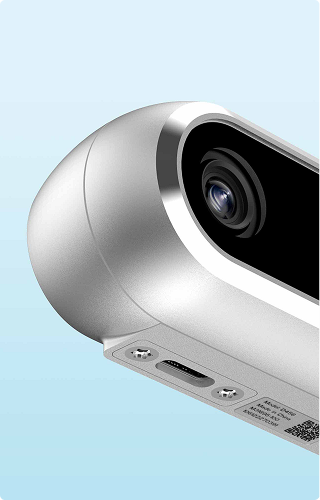
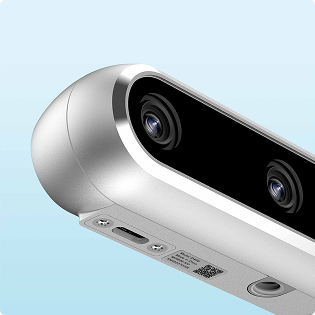
Stereo Depth Cameras
Precision 3D depth sensing for robotics, automation, and intelligent systems, from close-range inspection to long-range navigation.
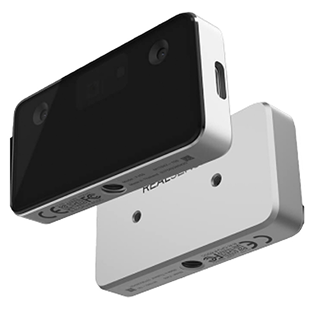
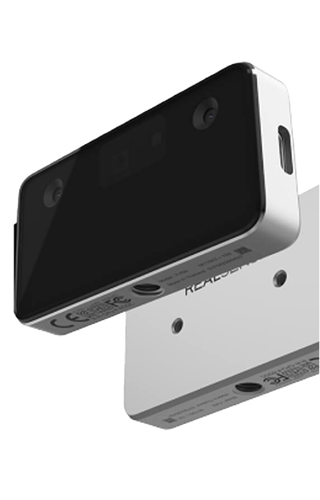
RealSense ID Pro
Fast, secure, and privacy-focused facial authentication with advanced 3D biometrics and anti-spoofing protection.
Software
Introducing Perception Studio
A continuous-release program delivering early access to next-generation perception capabilities built on RealSense depth cameras. Iterate fast. Ship faster.
Vision ai
Built From the Chip Up
RealSense doesn’t bolt perception onto someone else’s hardware. Owning the silicon means every layer, from sensor to algorithm, is tuned to work together, giving robots faster, more accurate depth perception with none of the latency or compromise that comes from stitching together off-the-shelf parts.
Solutions
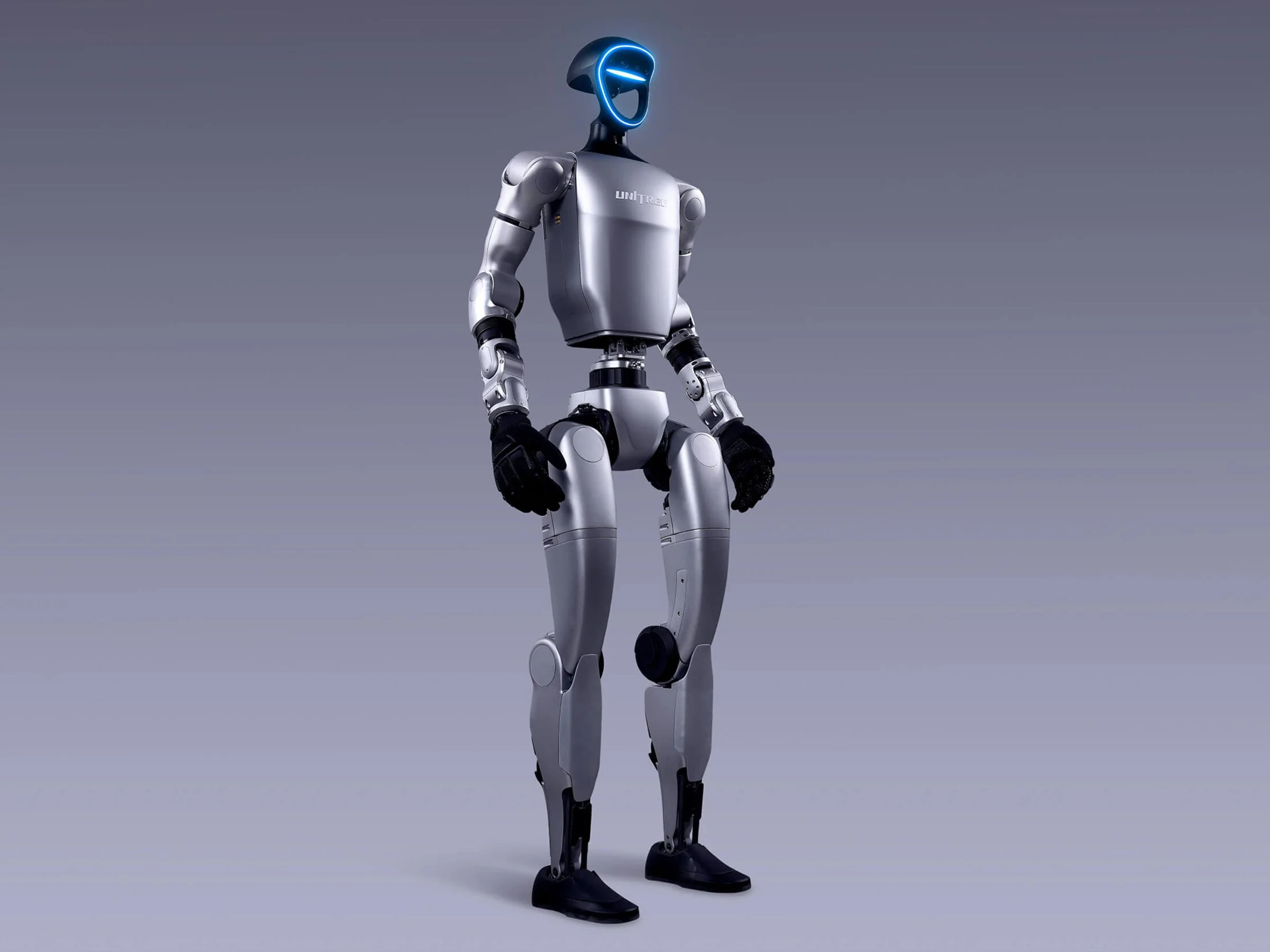
RealSense gives robots the perception they need to move with purpose and intelligence. Acting as the visual cortex for Physical AI, RealSense combines advanced depth sensing, inertial motion data, and automated calibration to deliver accurate, reliable 3D understanding in real-world conditions. From humanoids and autonomous mobile robots to agricultural, delivery, and industrial systems, RealSense enables precise localization, safe navigation, and consistent performance across dynamic, unstructured environments.
Every industry that measures the physical world — a foot, a food pan, a package, a part — runs into the same limit: humans are inconsistent, static tools are slow, and 2D cameras can’t capture volume. RealSense closes that gap with stereo depth cameras that deliver millimeter- and sub-millimeter-level dimensional accuracy, global-shutter capture for objects in motion, and an open-source SDK that turns raw depth data into production-ready measurement, volume, and dimensional-weighing tools. The same portfolio scales from a palm-sized handheld scanner to a ruggedized camera wired into a warehouse network — all validated at scale across logistics, industrial inspection, textile measurement, food service and more.
Factory floors don’t hold still. Parts shift in bins, conveyors keep moving, lighting changes shift-to-shift, and no two cycles look exactly alike. Rigid automation — built on fixtures, indexing, and repeated calibration — breaks down the moment reality drifts from the plan. RealSense stereo depth cameras give robotic arms, cobots, and the systems watching over them a continuous, geometry-based understanding of the floor, so automation adapts in real time instead of stopping the line when something moves.
The most immersive experiences aren’t always the ones built inside a headset. A wall that reacts when a child bounces a ball off it, a projected room that a shopper can walk through, a museum floor that responds to footsteps — all of it depends on a system that can see people and space in real time, at human scale, without asking anyone to strap on hardware. RealSense stereo depth cameras give immersive and mixed-reality platforms exactly that: real-time body and spatial tracking accurate enough to make a projected or virtual world feel like it’s actually reacting to you.
News & Insights

Case Studies